
If you run a business in India today, chances are you are juggling five or six different tools just to keep the lights on. One app for accounting, another for team chat, a spreadsheet for inventory, a CRM that never quite fits your sales process, and someone manually copying numbers between all of them at the end of every month. This is the exact problem that pushes business owners toward custom software development company . It is not about wanting something fancy. It is about needing a system that actually works the way your business works, instead of forcing your business to work the way some generic software was built years ago for a completely different kind of company.
In this guide, we will walk through what custom software development really means, why so many growing Indian businesses eventually move away from off the shelf tools, what kinds of custom systems deliver real results, how much it costs, and how to pick the right software development partner. This is written for founders, operations heads, and decision makers who want a straight, practical answer rather than a sales pitch.
What Is Custom Software Development, Really
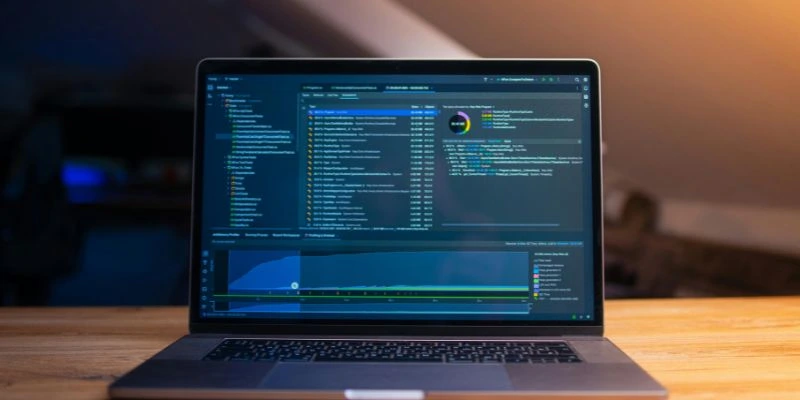
Custom software development is the process of designing, building, and maintaining software that is created specifically for one business, based on its actual workflows, customers, and goals. If you are planning to choose a custom software development company, understanding what custom software actually means is the first step. Instead of buying a license for a tool that thousands of other companies use in exactly the same way, you get an application, platform, or system that is designed around how your team already operates.
This is different from enterprise software development because it is not always about scale. A ten person logistics company and a five hundred person manufacturing firm can both benefit from bespoke software development, just at different levels of complexity. The common thread is that the software is built around the business, not the other way around.
A custom application development project can be as simple as an internal tool that automates purchase order approvals or as complex as a full SaaS platform that a company later sells to other businesses in its industry. What matters is that every screen, workflow, and report exists because it solves a real problem for real users in your company.
Why Off The Shelf Software Stops Working
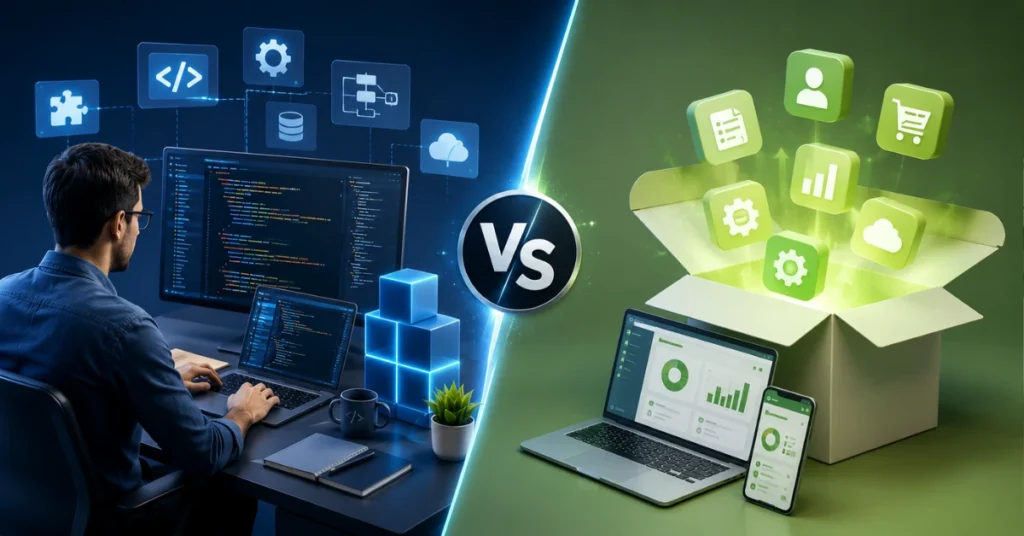
Ready made tools are genuinely useful in the early days of a business. They are cheap, quick to set up, and require no development effort. The trouble starts once a company grows past a certain point and its processes become more specific than what a generic tool was designed for.
1. Your Processes Are Not Generic
Most SaaS products are built for the average user across thousands of companies. Your business is not average. You have your own pricing logic, your own approval chains, your own way of handling customers, vendors, and staff. When the software cannot bend to fit this, your team starts building workarounds using spreadsheets, sticky notes, and WhatsApp groups. Over time, these workarounds become the real system, and the software you paid for becomes almost decorative.
2. The Subscription Math Gets Ugly
A few hundred rupees a month for one tool feels harmless. Add a CRM, a helpdesk tool, an inventory app, an HR platform, and a reporting dashboard, and you are easily paying a large sum every year for tools that barely talk to each other. This is usually the point where business process automation through one connected system starts to look far cheaper over a three to five year horizon than a pile of separate subscriptions.
3. Data Lives in Silos- Custom software development company
When sales data sits in one app, support tickets in another, and finance in a third, nobody in the company has a real time, accurate picture of the business. Leadership ends up making decisions based on numbers that are already a week old, manually pulled together in a spreadsheet. Custom software solves this by centralizing data in one place, which is one of the biggest reasons companies invest in it.
4. Growth Exposes the Cracks
A tool that worked fine for fifty orders a month often breaks down at five hundred. New branches, new compliance requirements, new customer segments all put pressure on systems that were never designed to flex. This is where legacy systems become a real liability, slowing down decisions instead of supporting them.
Also Read: The Complete Checklist for Building an SEO Friendly Website
Types of Custom Software Indian Businesses Actually Need
Rather than talking in abstract categories, here is what custom application development actually looks like in practice for Indian companies today.
1. Business Operations Platforms- Custom software development company
This is usually the starting point. One system that handles customers, orders or projects, billing, staff tasks, and reporting, replacing four to six separate subscriptions. For a service business, this alone can cut hours of manual admin work every week.
2. Custom CRM and Sales Systems
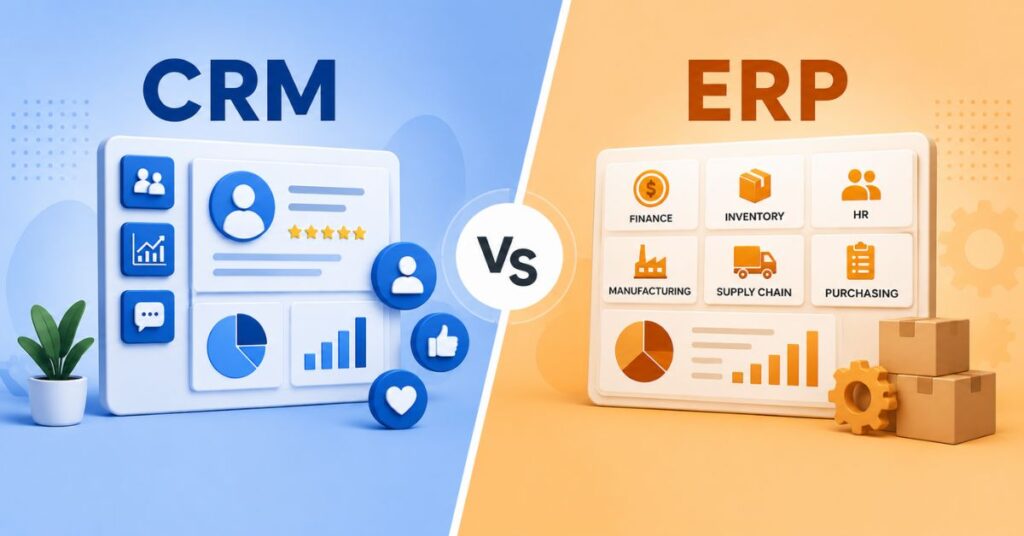
Not every company needs a heavyweight CRM built for global enterprises. Many businesses do better with a lightweight, custom built CRM designed around their real sales pipeline, local market behavior, and follow up patterns, often integrated with WhatsApp or calling systems that Indian sales teams already use daily.
3. Internal Process Automation Tools
Approvals, vendor coordination, document handling, compliance tracking, and field staff monitoring rarely exist as clean features in generic software. Custom automation tools built specifically for these workflows can save enormous amounts of time and reduce errors that come from manual handling.
4. Ecommerce and Client Portals- Custom software development company
Standard ecommerce plugins often cannot handle custom pricing models, bulk discounts, or specific vendor logic. A custom portal gives a business full control over customer experience, pricing, inventory behavior, and payment flows, which is often where smaller brands manage to compete with much bigger players.
5. Industry Specific Systems- Custom software development company
Real estate, healthcare support, logistics, education, and manufacturing all have workflows and compliance needs that standard software simply was not built for. Industry specific custom systems bring the right structure, reporting, and automation for these sectors.
6. SaaS Products Built From Internal Tools
Sometimes a system originally built for internal use turns out to be valuable enough that a company decides to package it and sell it to others in the same industry. This is a common path into SaaS development, and it usually starts with solving one company’s real operational pain point extremely well.
The Real Business Problems Custom Software Solves
Across almost every industry, the same complaints keep coming up from business owners.
Staff spend more time updating software than actually serving customers. Departments blame each other because they use disconnected tools. Leads get lost because nothing is properly tracked. Growth is happening, but the systems cannot keep up.
Custom software addresses these directly by removing duplicate data entry, automating repetitive tasks, giving departments a shared source of truth, and creating the kind of visibility that lets a founder actually see what is happening across the business without chasing five different people for updates.
Also Read: Best WordPress Plugins: The Only List You Actually Need
How To Approach Custom Software The Right Way
1. Start With Problems, Not Features
Before thinking about screens or apps, list out the actual bottlenecks. Where does work slow down. What tasks are repeated every single day. Where is data missing or outdated. What is stopping the business from growing further. Good software architecture always starts with business clarity, not a feature wishlist.
2. Define What Should Actually Change
Instead of saying you need an app, get specific. What should become faster, should become cheaper, t should become more accurate. What needs to scale without breaking. These answers drive every technical decision that follows, from database design to how the interface is structured.
3. Build The Core First- Custom software development company
Trying to digitize everything on day one is one of the most common mistakes. Start with the core workflows, the two or three integrations that actually matter, and the reports that leadership checks regularly. Everything else can be added once the foundation is stable.
4. Choose A Technology Partner, Not Just A Vendor
This is probably the most important decision in the entire process. A strong software development company in Lucknow will question weak assumptions, suggest simpler solutions where possible, and take time to understand your business model before writing a single line of code. This is very different from a vendor who simply builds whatever is written in a requirement document without pushing back on anything that does not make sense.
India has a genuine advantage here. There is a large pool of experienced engineers, strong product thinking in many software development agencies, and cost efficiency that makes it realistic for even small and mid sized businesses to hire software developers in India for serious, well built systems, not just cheap outsourced code.
5. Involve Real Users Early- Custom software development company
Staff and customers should interact with the product while it is still being built, not after it is finished. Early feedback prevents expensive redesigns and makes sure the final system actually gets adopted instead of ignored.
6. Plan For Long Term Software Maintenance
Custom software is not a one time purchase. It needs ongoing software support, security updates, and improvements as the business changes. A good technology partner plans for this from day one instead of disappearing after the first release.
What Does Custom Software Cost For Indian Businesses
There is no single fixed price, but realistic ranges help with planning.
Simple internal systems generally fall between four hundred thousand and one million rupees, covering basic workflows and process automation for a small team. CRM or operations platforms typically range from eight hundred thousand to two million rupees, including customer management, task tracking, and integrated reporting. Advanced multi module products with several integrations and full scalability usually start around two million rupees and can go higher depending on complexity.
What actually drives the cost is not the number of screens. It is the number of distinct workflows the system needs to support, how many outside tools it needs to integrate with, the security and compliance requirements, how many different user roles need different permissions, and how much room for future growth needs to be built in from the start.
Compared to years of scattered subscriptions, manual errors, and lost opportunities, a properly scoped custom system often works out to be the more economical choice over a three to five year period.
Also Read: Website Conversion Optimization: 10 Proven Strategies to Increase Leads
Common Mistakes To Avoid
A number of custom software projects run into trouble, and it is almost always for the same handful of reasons. There is no clear business owner guiding the project from the client side, which leaves the development team guessing. Teams over engineer the product with features nobody actually asked for. Businesses choose the cheapest available developers without checking whether they understand the industry at all. And there is no long term roadmap, so the software becomes outdated within a couple of years.
Smart businesses protect themselves by starting small, insisting on proper documentation, demanding modular architecture so features can be added later without breaking everything else, and prioritizing maintainable code over quick shortcuts. Working with an established software development partner rather than a single freelancer also makes a real difference when something needs fixing six months down the line.
Signs Your Business Is Ready For Custom Software
You are probably ready to move toward custom software development if your team uses four or more separate tools every single day, if reporting still requires manually pulling numbers together, if customers notice inconsistency in how they are served, if you are actively planning to expand into new locations or services, or if your software costs keep rising every year without any real improvement in productivity. If you are building something meant to last, not just chasing short term sales, this is usually the point where digital business transformation company through a properly built system starts paying for itself.
Final Thoughts on Custom software development company
Custom software is not really an expense once you look at it properly. It becomes the operational backbone of the business, a competitive advantage that competitors using generic tools cannot easily copy, and a foundation that supports scalable software solutions as the company grows. Businesses that invest in this early, with the right software development partner and a clear plan, tend to pull ahead of competitors who stay dependent on rigid, disconnected tools for far too long.
If your business has outgrown spreadsheets and scattered subscriptions, it might be time to have a serious conversation about what custom software development could look like for you.
Interesting Reads:
Why Every Business Needs a Professional Website
How to Build a WordPress Website
Best WordPress Plugins in 2026: The Only List You Actually Need